High Protein Cottage Cheese Sheet Pan Scrambled Eggs (14g Protein)

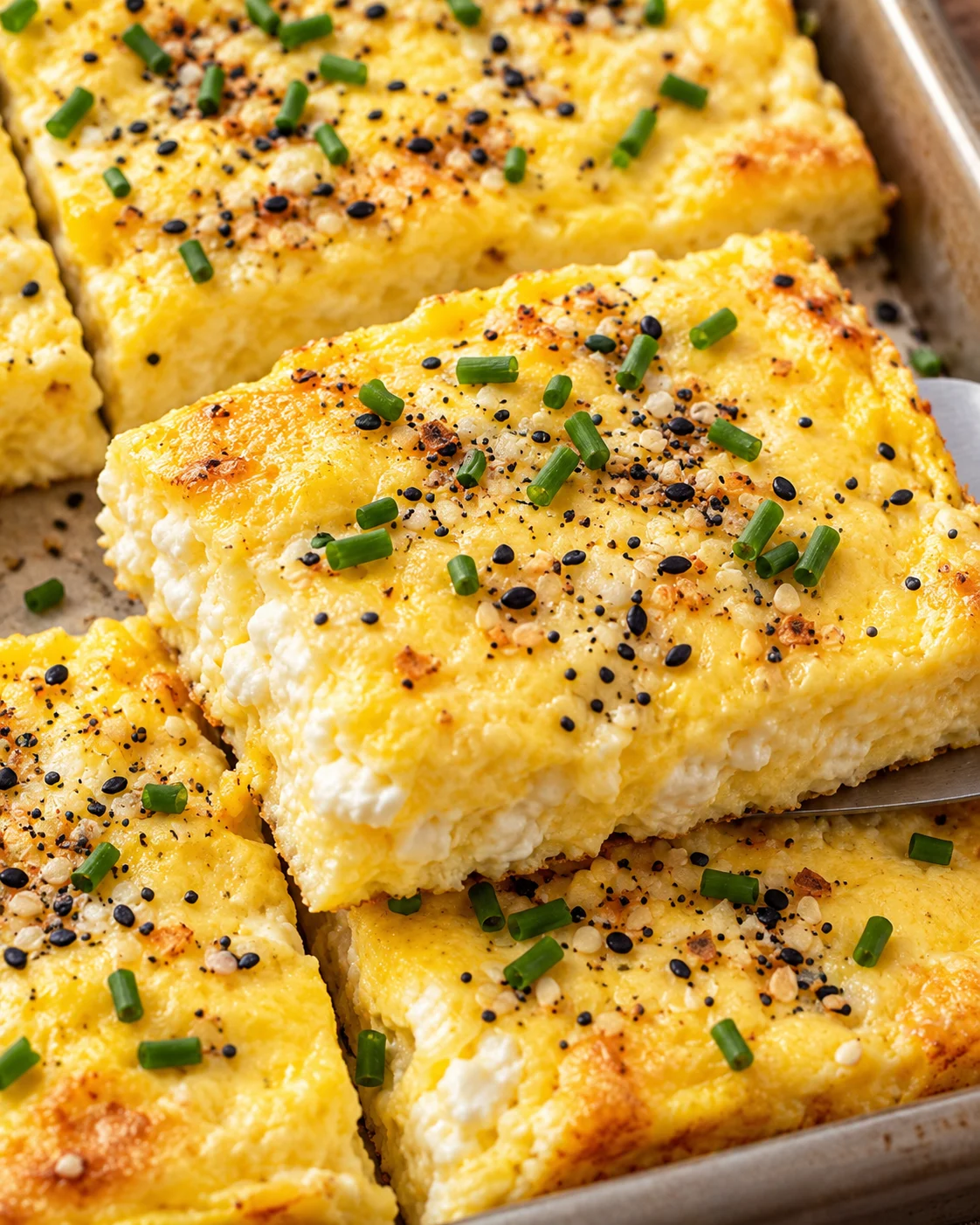
High protein cottage cheese sheet pan scrambled eggs (14g protein) turn a whole pan of breakfast into eight neat portions. The eggs bake into a soft, creamy slab that is easy to cut and tuck into an English muffin, bagel, or croissant. Cottage cheese is blended until completely smooth, so the finished eggs do not have visible curds.
The cottage cheese does more than add protein. Its real benefit here is improved texture and moisture retention, while the egg whites increase the protein in the egg mixture. The result is a practical base for breakfast sandwiches, whether you add cheese and meat or keep the portions simple.
The method has one important difference from standard sheet pan eggs: the added moisture means the mixture needs more time to set. Blend the cottage cheese thoroughly, spread the thicker batter into every corner of the parchment-lined pan, and wait for a completely firm center before cutting.
Each portion of the egg mixture provides approximately 14g of protein. Add Canadian bacon, cheese, and an English muffin, and the sandwich reaches approximately 33g of protein. The recipe also leaves room for toppings such as chives, everything bagel seasoning, or fresh dill.
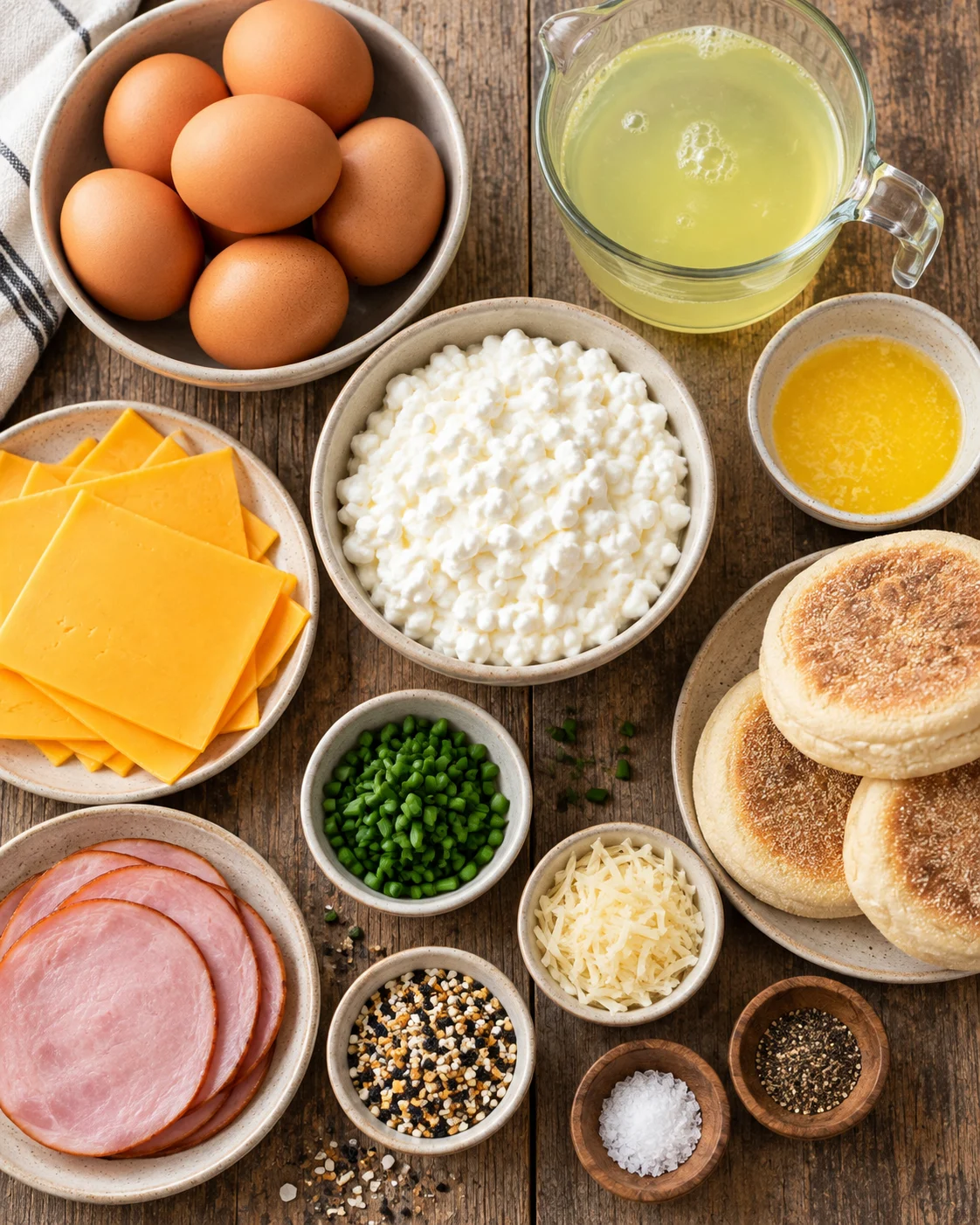
Ingredients
-
12 large eggs
-
4 egg whites, or 1/2 cup liquid egg whites from a carton
-
1 cup cottage cheese, 4% milkfat works best — see notes below
-
1/2 teaspoon salt
-
1/4 teaspoon black pepper
-
2 tablespoons butter, melted
-
8 English muffins, bagels, or croissants
-
8 slices cheese, Swiss, cheddar, or provolone
-
8 slices Canadian bacon, turkey bacon, or ham, highly recommended for protein
-
2 tablespoons fresh chives, chopped; optional
-
Everything bagel seasoning, for topping; optional
-
fresh dill, optional
-
1/4 cup shredded parmesan, adds 5g protein to whole batch; optional
The cottage cheese is blended before it joins the eggs. Use 4% milkfat cottage cheese for the intended mixture, and keep blending until no visible curds remain. Greek yogurt is not a good substitute: it is too thick and tangy, and the eggs will taste sour. Ricotta can be used, but it produces denser eggs with a slightly grainier texture.
How to Make High Protein Cottage Cheese Sheet Pan Scrambled Eggs (14g Protein)
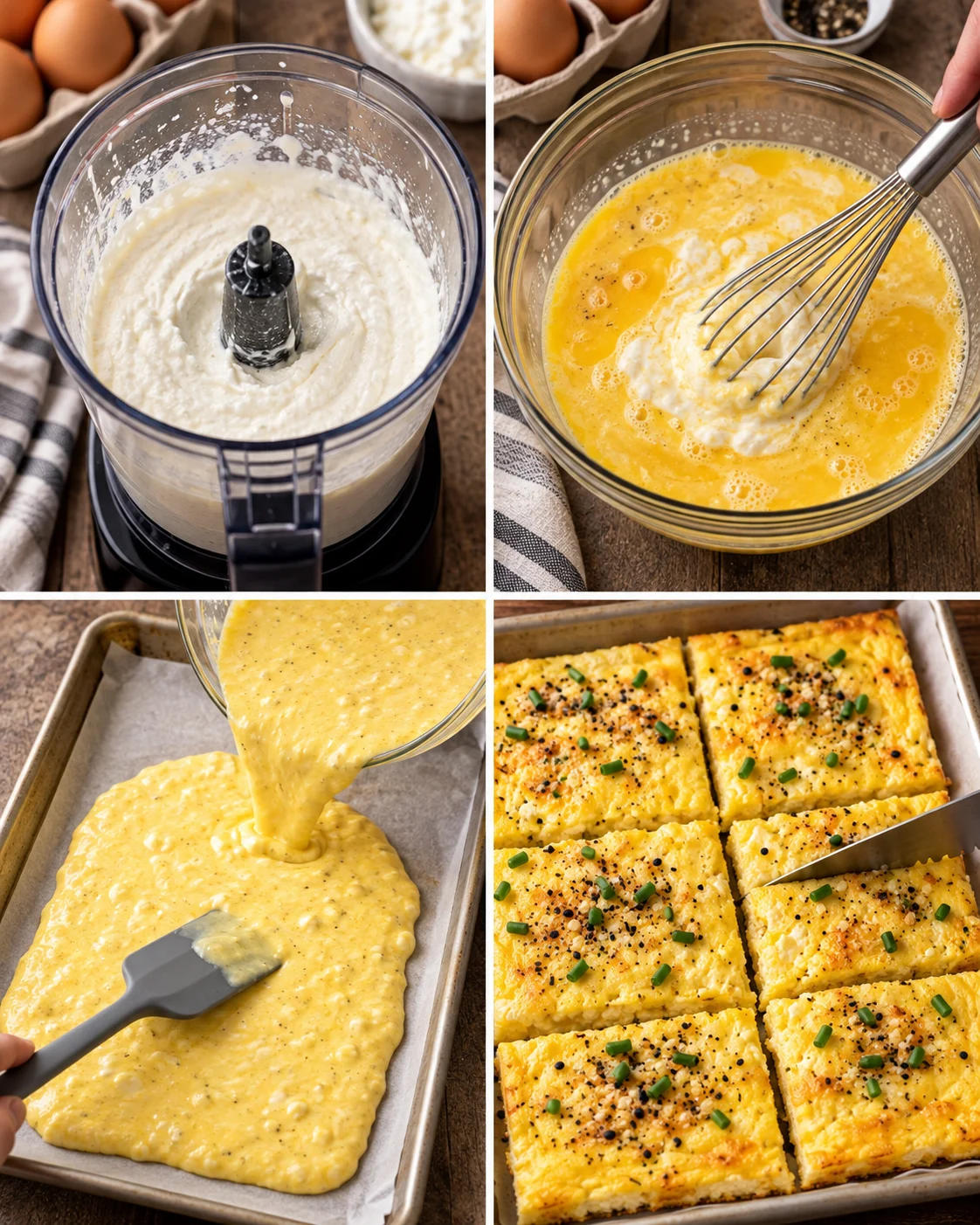
Preheat the oven to 350°F (175°C). Place the cottage cheese in a blender or food processor and blend on high for 45–60 seconds, longer than you think necessary. Stop to scrape down the sides, then blend for another 15 seconds. Check the texture and continue blending if any lumps remain. The cottage cheese should have zero visible curds before it is added to the eggs.
Line an 18×13-inch half sheet pan with parchment paper, bringing the paper up on all four sides. Brush the parchment generously with the melted butter, including the corners. This preparation gives the egg mixture a buttered surface to bake on and helps cover the entire pan.
Crack the eggs into a large mixing bowl and add the egg whites. Pour in the blended cottage cheese, then add the salt and black pepper. Whisk vigorously for 45–60 seconds, until the mixture is completely uniform and slightly frothy. If using chives or parmesan, fold them in now.
Pour the mixture onto the prepared sheet pan. The batter will be thicker than regular eggs, so tilt the pan gently to spread it evenly into the corners. If tilting is not enough, use a spatula to spread the mixture across the parchment.
Bake for 18–22 minutes, starting to check at 18 minutes. The cottage cheese mixture takes 3–5 minutes longer than regular sheet pan eggs because its extra moisture needs more time to set. The eggs should be set and slightly puffed, with a completely firm center and no jiggle. Do not underbake.
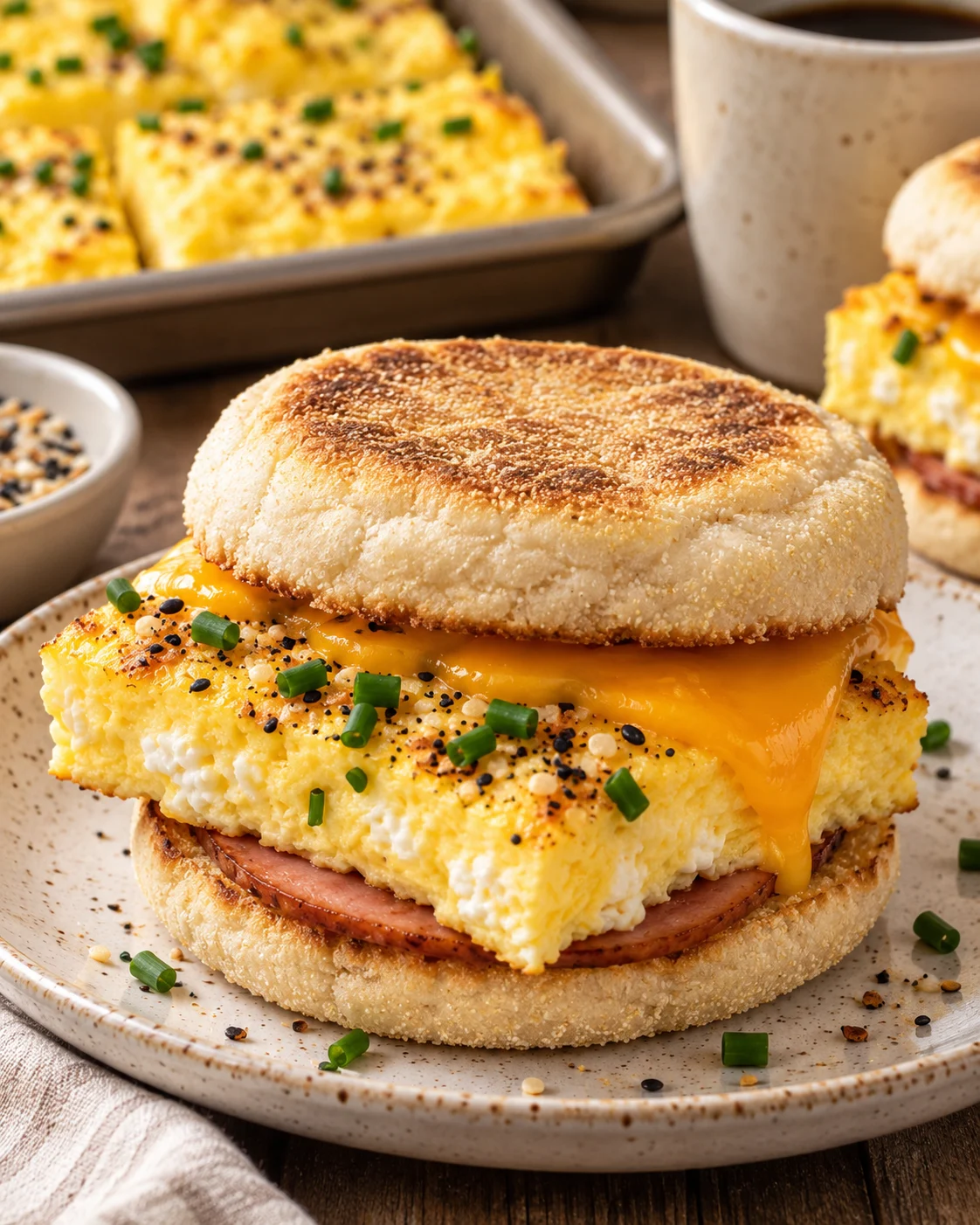
Remove the pan from the oven and let the eggs cool for 3–4 minutes. They will deflate slightly as they cool; that is normal. While they rest, toast the bread. Use a pizza cutter to divide the eggs into 8 rectangles, then assemble the sandwiches with an egg portion, cheese, and meat if using.
Serving Suggestions
For a breakfast sandwich, place one egg rectangle on an English muffin, bagel, or croissant and add a slice of cheese plus Canadian bacon, turkey bacon, or ham. The supported protein estimate is approximately 14g per serving from the egg mixture alone. With Canadian bacon, a slice of cheese, and an English muffin, the sandwich provides approximately 33g of protein.
For a loaded breakfast, serve the eggs on everything bagels with cream cheese and smoked salmon. Everything bagel seasoning can add extra flavor without extra calories. Another option is to pair the eggs with fresh berries and a side of Greek yogurt for a complete high protein breakfast.
The baked portions can also go into a low carb tortilla with avocado and turkey bacon. For a simpler plate, serve the eggs plain alongside chicken sausage links. These options use the same sheet pan egg portions while changing the way they are served. For another recipe idea, explore Spinach & Egg Meal Prep Breakfast Sandwiches. For another recipe idea, explore 5 Minute Protein Breakfast Sandwich.
Why You’ll Love It
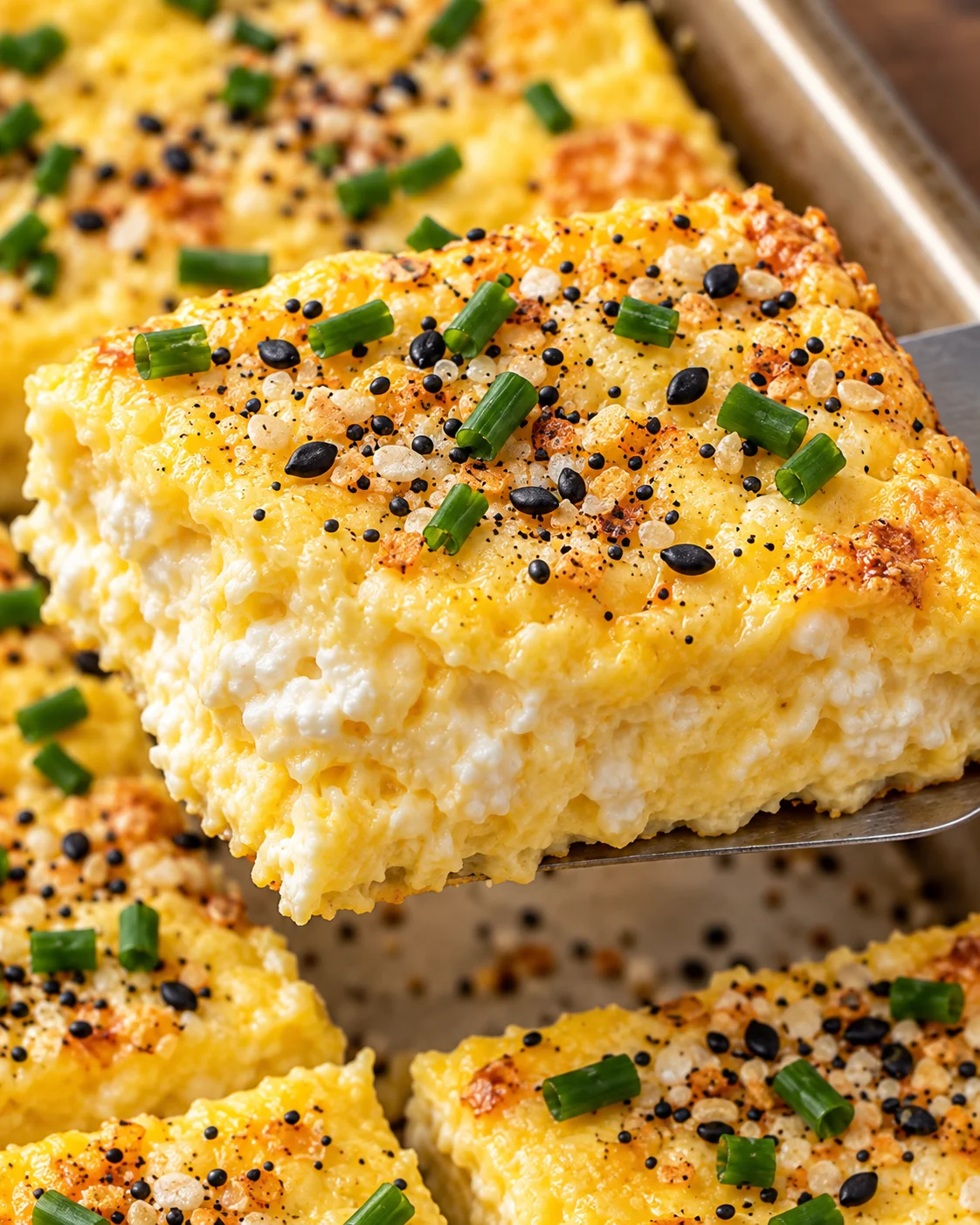
These high protein cottage cheese sheet pan scrambled eggs make eight portions from one baked pan, giving the eggs a useful shape for sandwiches. Cutting the set eggs into rectangles means each portion can be paired with the bread, cheese, and meat of your choice without scrambling individual servings.
The protein comes from both the eggs and the cottage cheese. The egg mixture provides approximately 14g of protein per serving, while the sandwich additions can raise the total to approximately 33g. Shredded parmesan adds another 5g of protein to the whole batch if it is folded into the mixture. You can also browse Blender Cottage Cheese Pancakes Recipe (25g of Protein!) – Eat the Gains for another option. For another recipe idea, explore Keto Chicken Parmesan.
Cottage cheese is included for more than its protein contribution. The recipe specifically uses it to improve texture and moisture retention. Once blended smooth, it becomes part of a creamy baked egg mixture rather than leaving visible curds in the finished portions.
Pro Tips for Success
Blend the cottage cheese until it is completely smooth. The initial 45–60 seconds is followed by scraping the sides and another 15 seconds of blending, but the visual test matters most: continue blending if any curds remain. This step keeps the egg mixture uniform. Another recipe you may want to try is Grab-N-Go Egg Bites with Cottage Cheese.
Expect a thicker batter than you would have with regular sheet pan eggs. Tilt the pan to move the mixture toward the corners, then use a spatula if necessary. Bringing the parchment up on all four sides also keeps the mixture contained in the half sheet pan.
Do not judge doneness by puffing alone. The eggs puff more during baking and deflate slightly during the 3–4 minute cooling period. Instead, look for a completely firm center with no jiggle. The cottage cheese adds moisture, so the eggs take 3–5 minutes longer than regular sheet pan eggs; start checking at 18 minutes, but do not remove them while the center is still loose.
Use 4% milkfat cottage cheese for the stated preparation. Greek yogurt is too thick and tangy for this recipe and gives the eggs a sour taste. Ricotta works differently, producing denser eggs with a slightly grainier texture.
For a higher-protein version, increase the egg whites to 6 and the cottage cheese to 1.5 cups. This adds about 18g of protein to the whole batch.
Flavor and Texture
The finished eggs are creamy, moist, and cohesive enough to cut into rectangles. They puff during baking and settle slightly as they cool, while the center remains creamy rather than becoming visibly curdled. The blended cottage cheese contributes to that texture without leaving visible curds. For more inspiration, see Tex-Mex Breakfast Bowls.
Salt and black pepper keep the egg mixture simply seasoned, while optional chives, parmesan, everything bagel seasoning, and fresh dill provide different finishing directions. The eggs themselves can stay plain for a simple plate or become the base of a more substantial sandwich with cheese and meat.
Frequently Asked Questions
What temperature should I use for these sheet pan scrambled eggs?
Bake them at 350°F (175°C). The eggs bake in a parchment-lined 18×13-inch half sheet pan.
How do I know when the eggs are ready?
They should be set and slightly puffed, with a completely firm center and no jiggle. Start checking at 18 minutes. Because the cottage cheese adds moisture, the mixture takes 3–5 minutes longer than regular sheet pan eggs, so do not underbake it.
Why should the cottage cheese be blended so thoroughly?
Blend it until there are zero visible curds. Blend on high for 45–60 seconds, scrape the sides, blend for another 15 seconds, and continue if lumps remain. The recipe uses the smooth cottage cheese in a uniform egg mixture.
Can I use Greek yogurt or ricotta instead of cottage cheese?
Greek yogurt is not a good substitute because it is too thick and tangy, and the eggs will taste sour. Ricotta works, but the eggs will be denser with a slightly grainier texture.
How can I serve the baked egg portions?
Use them in sandwiches with an English muffin, bagel, or croissant, plus cheese and Canadian bacon, turkey bacon, or ham. They can also be served on everything bagels with cream cheese and smoked salmon, in a low carb tortilla with avocado and turkey bacon, or plain alongside chicken sausage links.
PrintMake High Protein Cottage Cheese Sheet Pan Scrambled Eggs (14g Protein) with clear ingredient guidance, step-by-step instructions, and practical tips.
Ingredients
- 12 large eggs
- 4 egg whites, or 1/2 cup liquid egg whites from a carton
- 1 cup cottage cheese, 4% milkfat works best — see notes below
- 1/2 teaspoon salt
- 1/4 teaspoon black pepper
- 2 tablespoons butter, melted
- 8 English muffins, bagels, or croissants
- 8 slices cheese, Swiss, cheddar, or provolone
- 8 slices Canadian bacon, turkey bacon, or ham, highly recommended for protein
- 2 tablespoons fresh chives, chopped
- Everything bagel seasoning, for topping
- fresh dill
- 1/4 cup shredded parmesan, adds 5g protein to whole batch
Instructions
- Preheat the oven to 350°F (175°C).
- Place cottage cheese in a blender or food processor.
- Blend on high for 45–60 seconds until completely smooth, longer than you think necessary.
- Stop and scrape the sides, then blend for an additional 15 seconds.
- Check texture; continue blending if any lumps remain until there are zero visible curds.
- Line a half sheet pan (18×13 inches) with parchment paper, bringing the paper up on all four sides.
- Brush parchment generously with melted butter, including the corners.
- Crack the eggs into a large mixing bowl and add the egg whites.
- Pour in the blended cottage cheese.
- Add salt and pepper.
- Whisk vigorously for 45–60 seconds until the mixture is completely uniform and slightly frothy.
- If using chives or parmesan, fold them in now.
- Pour the egg mixture onto the prepared sheet pan.
- Tilt the pan gently to spread the eggs evenly to all corners.
- Bake for 18–22 minutes until the eggs are set and slightly puffed.
- Note that cottage cheese mixture takes 3–5 minutes longer than regular sheet pan eggs; do not underbake.
- The center should be completely firm with no jiggle.
- Remove from oven and let cool for 3–4 minutes; the eggs will deflate slightly, which is normal.
- Use a pizza cutter to cut into 8 rectangles.
- Toast your bread while the eggs rest.
- Assemble sandwiches with an egg portion, cheese, and meat if using.
Notes
The batter will be thicker than regular eggs. This is normal. Use a spatula to spread it to the corners if tilting the pan is not enough. These eggs puff up more during baking and deflate as they cool. Do not panic — the texture remains creamy. Bake time is longer than standard sheet pan eggs. The extra moisture from cottage cheese needs more time to set. Start checking at 18 minutes. Greek yogurt is not a good substitute. It is too thick and tangy. The eggs will taste sour. Ricotta works but produces denser eggs with a slightly grainier texture. For higher protein, increase to 6 egg whites and use 1.5 cups cottage cheese. This adds about 18g protein to the whole batch.
Eggs and egg whites: 10.75g Cottage cheese (1 cup divided by 8): 3.5g Total from egg mixture: approximately 14g protein per serving Add Canadian bacon (+9g), a slice of cheese (+5g), and an English muffin (+5g) for a 33g protein sandwich. The real benefit of cottage cheese is not massive protein gains — it is the improved texture and moisture retention.
Serve on everything bagels with cream cheese and smoked salmon for a loaded breakfast. Top with everything bagel seasoning for extra flavor without extra calories. Pair with fresh berries and a side of Greek yogurt for a complete high protein breakfast. Wrap in a low carb tortilla with avocado and turkey bacon. Serve plain alongside chicken sausage links for a simple high protein plate.
More in Uncategorized

The Best Healthy Turkey Chili
Greek Chicken Bowls
Protein Pudding